
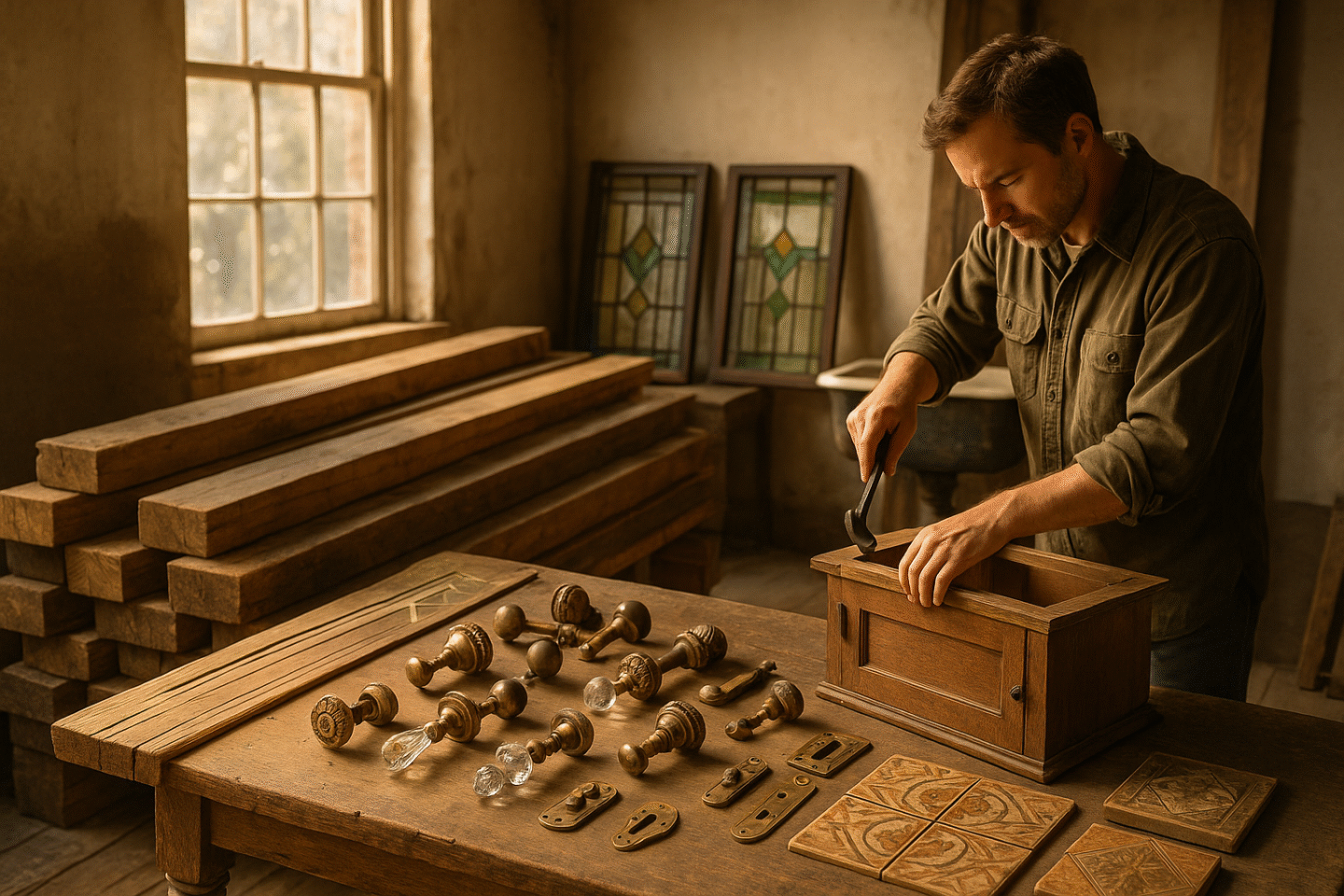
Renovations are one of a kind exciting projects. The air is full of possibilities; Pinterest boards are overflowing; and someone can see their dream place coming to life. But since the new is coming in first, the old has to go. This way of thinking generally makes me picture a big dumpster in the driveway, slowly filling up with broken wood, old drywall, and broken fixtures. One thinks of it as an important but pointless part of the process.
However, a lot of that so-called “waste” isn’t really waste at all. It’s possible that your old house is like a treasure chest full of beautiful, unique materials that are just ready to be used again. Today, renovating with salvaged, re-used, and recycled materials is making huge steps forward for good reasons. The main reasons are that it is environmentally friendly, it saves money, and it makes a place that feels very private. The past in your home shouldn’t be seen as something to throw away; it should be seen as something to be proud of and use.
More Than Just Debris: Uncovering Hidden Treasures
Take a second to look more closely at that old pink bathroom before you hit it with a sledgehammer. A lot of the time, the products used in older homes aren’t easy or cheap to find these days. For example, wood that is decades old comes from mature trees that grow slowly. This makes it denser and more lasting than a lot of the lumber that is made today. This isn’t just trash; it’s high-quality building material that you can’t miss.
There are many more ways to reuse this material than with solid lumber. You can repair hardwood floors and keep their unique patina that no new floor will ever be able to copy. Solid wood internal doors with their original crystal or brass doorknobs are heavy and have a style and charm that hollow core doors don’t have. Antique lights, stained-glass windows, fireplace mantels, cast-iron sinks, and odd-shaped tiles are some other things that could be reused. They bring with them the history of the house. Using some of these in the design is a beautiful way to honour the past and make the space feel real and full of layers. When reclaimed pieces are used in a whole home remodel, they give the house its own personality and create an emotional link between the past and the present.
A Smart Takedown: Understanding Deconstruction
How could these things be saved without being damaged? The trick is to change your mind from tearing things down to putting them back together. Even though they might look alike, they actually do very different things. In traditional deconstruction, the building is torn down quickly and violently. The goal is to get rid of the building quickly so it can be taken to a landfill as a pile of rubble. This drill does its job, but it kills the things it’s drilling into.
Carefully taking apart a building piece by piece so that materials can be used again is what deconstruction is all about. To put it another way, it’s taking down your house. This process is more thorough, so it takes longer, needs more skills, and needs to be planned out. That means slowly pulling up floors instead of stomping on them, slowly unscrewing cabinets instead of ripping them out of the wall, and slowly removing each brick. It is important to find a professional who knows how to do this. When you hire a deconstruction trained demolition contractor, you’re not just getting someone to tear down your project; you’re also getting a real working relationship with an expert who knows how to save the good stuff that’s been stored in your house and is ready to be taken away before the big clearing starts.
The Double Win: Benefits for Your Wallet and the World
You could also say that salvaging is a two-for-one deal: it’s good for the earth and it doesn’t cost much. There are a lot of perks for sustainability. A huge amount of building and demolition waste ends up in landfills. To stop this, the waste can be broken down and used again, instead of going to a landfill. This also matches the need for new resources, so the amount of trees, digging, and energy used to make new things goes down. One less tree has to be cut down for every old door that is used again.
The financial advantages are also attractive. To begin, it gets cheaper to buy new things. If you buy reclaimed wood, floors, or hardware, the price may go down a lot. Second, one-of-a-kind things that you don’t plan to use can be sold in online or architectural salvage markets to make some extra cash. Last but not least, tax breaks could also be useful. People who give things to nonprofits like Habitat for Humanity Restore might be able to get a tax break for the value of the things they give. When you look at the money you’ll save on selling and the tax breaks that come with it, the slightly higher cost of deconstruction is often a very smart financial move.
Building the Future with a Piece of the Past
You were lucky to get that great renovation job done. Enjoy this time to remember your dear, lovely old house. With all the things that most people think make a building old and not worth updating, it’s safe to assume that the building hides high-quality materials and even more stories. Recycling and reusing things is a choice that is good for the earth, the economy, and the person making the choice. You will find a way to combine the house’s past and present, turning it into a truly beautiful place full of meaning and history.
Before they roll the trash can away, you might want to take one last slow walk through the house and ask yourself: what gems might be hidden in plain sight?