

Introduction: The Hair We Don’t Talk About
Hair loss is one of those symptoms nobody really prepares you for. It isn’t just about vanity, it’s about identity. It’s the shock of seeing more strands than usual in the shower drain, or parting your hair in the mirror and realising the line is wider than it used to be.
I first noticed mine thinning at the temples and through the middle parting. The texture changed too: what used to be thick, curly, and full-bodied started falling straighter, finer, and weaker. At the same time, coarse hairs sprouted in places I didn’t want them — chin, stomach line, even around my nipples. It felt like my body was contradicting itself: losing and growing hair at the same time.
When I searched online, I found the same answers on repeat: shampoos, biotin, minoxidil. But none of these explained why my hair was changing, or what I could do to actually stop it at the root cause.
The missing piece — the part too many articles skip — is insulin resistance. And once you understand that, the whole story of PCOS hair loss starts to make sense.

PCOS in 2025: More Than Hormones
Polycystic ovary syndrome is often described as a hormone imbalance, but it’s increasingly recognised as a metabolic disorder. You can have PCOS without ovarian cysts, you can be lean and still insulin resistant, and you can have completely different symptoms to the next woman.
That’s why it’s so misunderstood. For some of us, it shows up as irregular cycles. For others, it’s acne, fatigue, or weight gain. And for many, the earliest signs are written in our hair.

Insulin Resistance and Hair Loss: The Silent Link
Here’s what most doctors don’t explain clearly enough:
- High insulin levels, even with “normal” blood sugar, drive the ovaries and adrenal glands to produce more androgens.
- Excess androgens shrink hair follicles on the scalp, leading to thinning at the temples, parting, and crown.
- Those same androgens stimulate hair growth in other areas, which is why women with PCOS often battle chin hairs and body hair alongside scalp thinning.
A 2025 paper in the Journal of Endocrine Metabolism confirmed that insulin resistance is directly linked to female hair loss in PCOS, even in women with a healthy BMI. This is why so many women who don’t fit the “stereotype” still struggle with hair loss.
My Personal Journey with PCOS Hair Loss
For me, it started with subtle shedding that turned into visible gaps. My once-dense curls softened, fell straighter, and lost volume. I’d run my hands through my hair and feel how much lighter it was.
At the same time, I was plucking stubborn chin hairs, checking my skin for hormonal acne, and wondering how to take back control. No topical treatment ever gave me lasting results, and I knew I had to look deeper than surface fixes.
That’s when I started focusing on insulin resistance as the underlying driver.
Healing From the Inside Out
The truth is: hair oils, shampoos, and even minoxidil can only go so far. If the internal imbalance is ignored, the cycle continues. What made the difference for me was shifting focus to metabolic health first.
Balancing Blood Sugar
- Replacing refined carbs with lower GI options like quinoa, lentils, and berries.
- Pairing carbs with protein and fat at every meal.
- Walking after meals to help insulin work more effectively.
Prioritising Protein and Nutrients
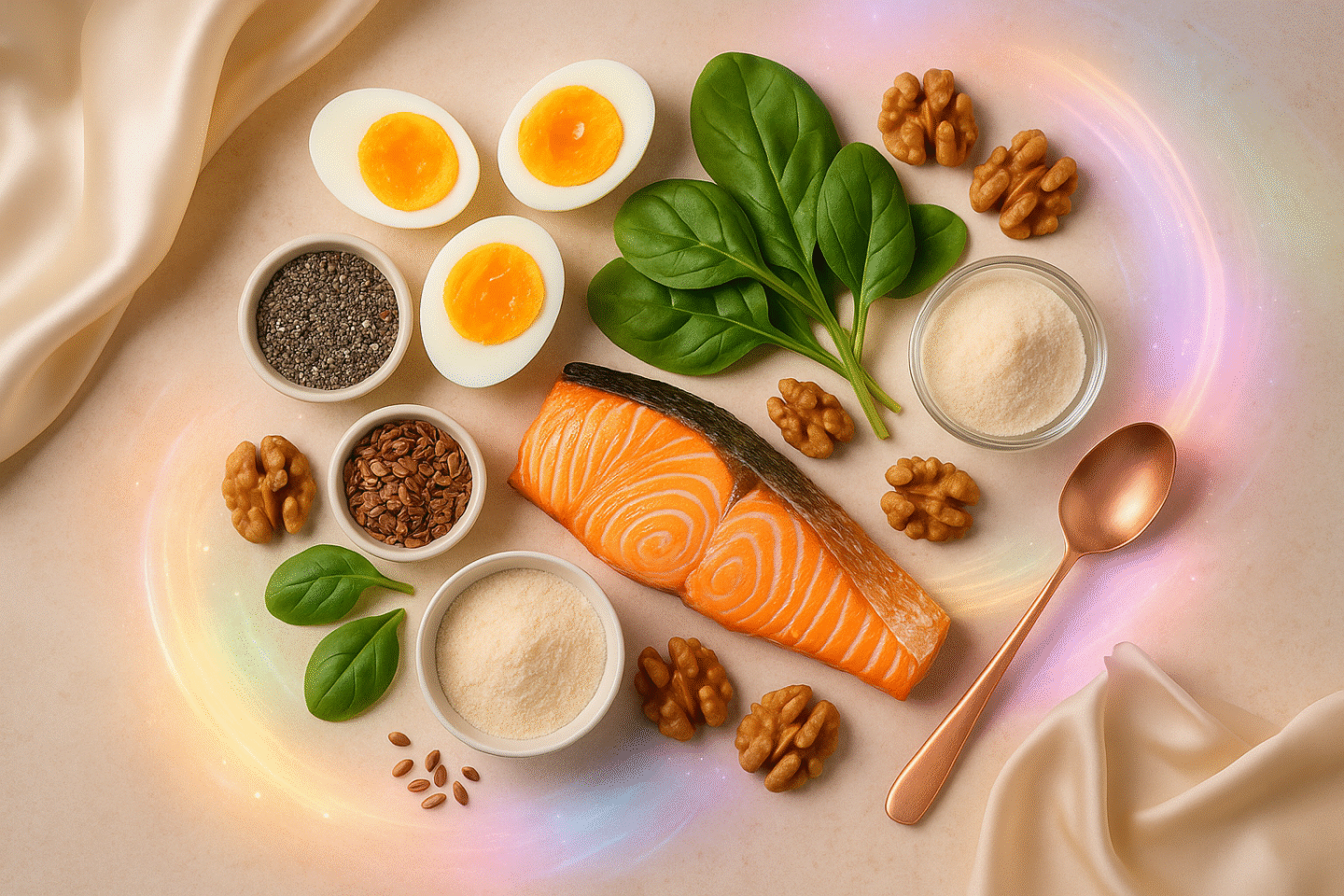
- Making eggs, spinach, chia and flax seeds, and salmon daily staples.
- Cooking whole chicken and using the broth for collagen-rich meals.
- Adding marine, bovine, and type II collagen to my cacao ritual each day.
Key Supplements
- Inositol (Myo and D-Chiro blend) at 2–4g daily.
- Magnesium glycinate, especially at night.
- Vitamin D with K2, plus zinc and copper for follicle support.
Lifestyle Shifts
- Building muscle with strength training to increase insulin sensitivity.
- Extending sleep beyond my usual six hours whenever possible.
- Getting outside in daylight every day.
Supportive Hair Care
Once the inside work began, I layered in supportive habits for my hair itself:
- Scalp massage with rosemary oil for circulation.
- Silk pillowcases and gentle hair ties to reduce breakage.
- Letting my hair air dry rather than constant heat.
These didn’t solve the issue alone, but they supported the bigger reset.
A 12-Week Reset Plan
If you’re starting from scratch, here’s what helped me create noticeable change in three months:
- Cut refined sugar and processed carbs.
- Test fasting insulin or HOMA-IR, not just glucose.
- Start inositol if it’s safe for you.
- Add two to three strength workouts each week.
- Eat at least one nutrient-dense “hair food” daily — eggs, salmon, spinach, flax.
- Track progress monthly instead of daily, because hair grows in cycles.
By week 12, many women not only notice less shedding, but improvements in skin, cycles, and energy.

Final Thoughts
Hair loss in women with PCOS isn’t superficial. It’s a signal that the body is out of balance.
When I reframed my hair loss not as vanity but as a metabolic symptom, the path forward became clearer. My hair density isn’t where it once was, but the shedding slowed, my energy improved, and I finally feel like I’m supporting my body instead of fighting it.
If you’re searching endlessly for a cure, know this: the answer isn’t just in bottles or serums. It’s in how we eat, move, sleep, and support our hormones. It’s in seeing PCOS not just as a reproductive condition, but as a whole-body metabolic story.
References
- Journal of Endocrine Metabolism (2025): Insulin resistance and hair loss in women with PCOS.
- Gersh, F. PCOS SOS.
- Sims, S. Next Level.
- Nutrients Journal (2023–2025): Studies on inositol, magnesium, and women’s metabolic health.
- Huberman Lab Podcast (2024): Nutrition and insulin resistance in women.