
The Truth About Rhinoplasty Recovery: What Those Before-and-Afters Don’t Show You
Before-and-after photos are everywhere. A slightly swollen “before” and a polished “after.” For anyone considering rhinoplasty, those images can be exciting but they can also be misleading.
The reality is, rhinoplasty recovery is not an easy leap from “old nose” to “new nose.” It is a journey. You may experience puffy mornings, emotional moments in front of the mirror, small changes that only you notice, and a lot of patience along the way.

According to Dr. Mina Jahani̇hi̇vehchi̇, an ENT specialist and surgeon at Erdem Hospital, this is what many people aren’t ready for. “Rhinoplasty is not just about the surgery day,” Dr. Jahani̇hi̇vehchi̇ says. “It is also about understanding the healing period and allowing your body enough time to show the final result.”
The First Week Is Not the Final Look
The first few days after rhinoplasty can feel dramatic. You may notice swelling around your nose and eyes, bruising, congestion and fatigue. You may have the odd sensation of struggling to breathe normally through your nose for a while. For some patients, this is when doubt begins to creep in.
That’s why managing expectations is crucial.
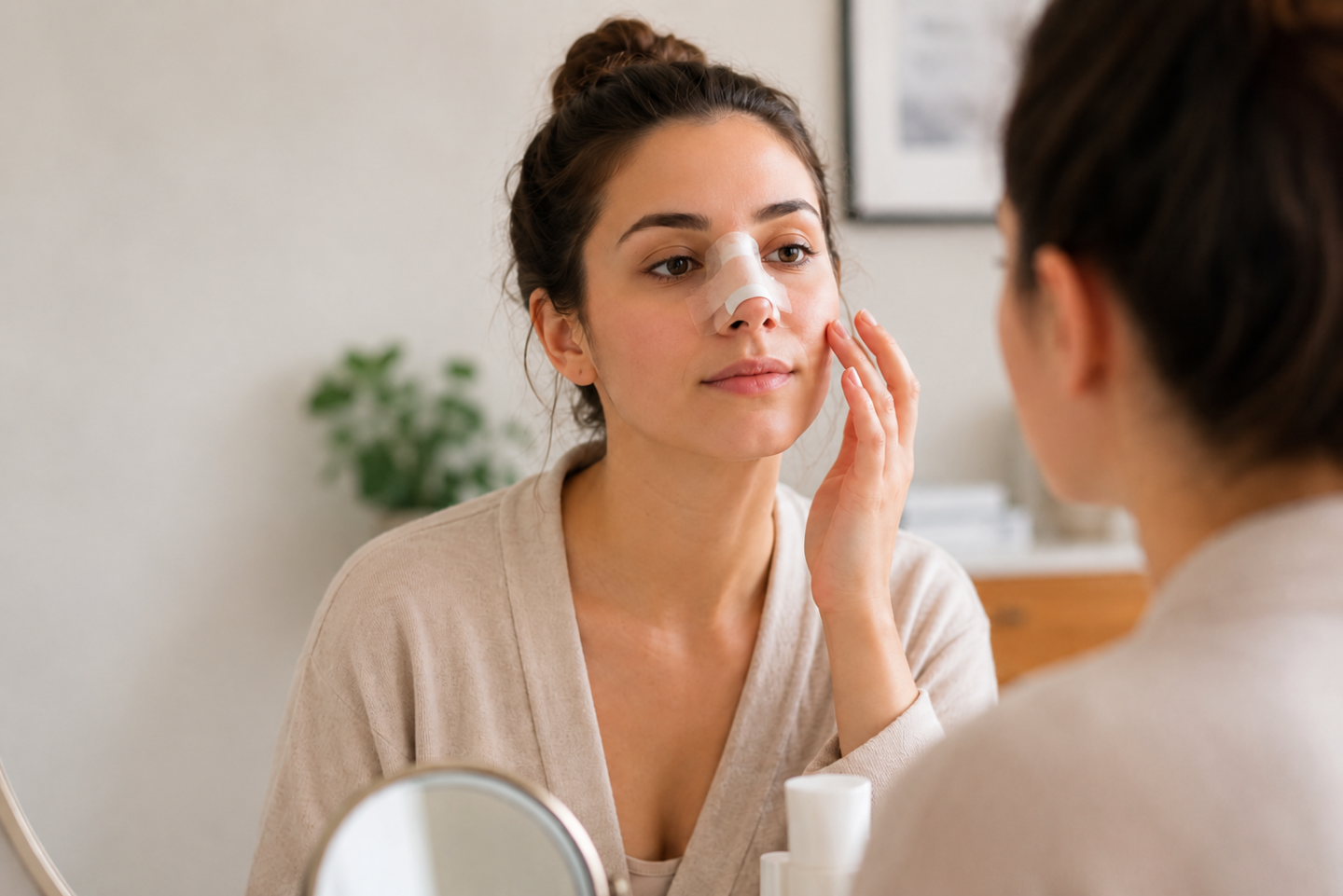
“Patients sometimes look in the mirror too early and become worried,” Dr. Jahani̇hi̇vehchi̇ explains. “But the nose you see in the first week is not your final nose. It’s a healing nose.”
This is an essential point. The splint, swelling, bruising, and stiffness can make your face feel different at first. Even when everything is going as it should, it may not feel “normal” yet. That doesn’t mean something is wrong. It often just means the body is healing slowly, unevenly, and at its own pace.
Most patients can return to light daily activities pretty quickly, depending on their doctor’s advice. That doesn’t mean the nose has stopped changing though. The visible healing and the deeper healing often don’t follow the same timeline.
Swelling Has a Personality
One thing that before-and-after photos rarely capture is how unpredictable swelling can be. It might be more noticeable in the morning or look different from one side to the other. Early symptoms may also return after a busy day, a salty meal, or a night of poor sleep.
This can be frustrating, especially for patients who monitor every small change.
“Swelling is not a straight line,” Dr. Jahani̇hi̇vehchi̇ says. “It can go up and down. What we want is overall progress over time, not perfection every morning.”
That statement is important to keep in mind. Recovery isn’t a daily beauty challenge. It’s a gradual settling process.
Comparing your recovery to someone else’s online experience can be unfair and unrealistic.The tip of the nose, in particular, might take longer to refine. Patients with thicker skin may also find that swelling takes longer to subside. Other people’s anatomy, technique, skin type, healing rate, and even photo lighting may be completely different than yours.
The Emotional Side Is Real
Rhinoplasty happens on the center of the face. It makes sense that recovery can feel personal. You are not simply waiting for a small scar to fade or a bruise on your arm to disappear. You’re looking at your face multiple times a day, trying to make sense of the process.
Some patients feel excited. Some feel anxious. Some experience both emotions within the same hour.
Dr. Mina Jahanihivehchi emphasizes that this emotional aspect shouldn’t be overlooked. “A good rhinoplasty journey includes clear communication,” she notes. “Patients should feel comfortable asking questions, even if they seem small.”
That reassurance can significantly impact healing. It’s easier when patients know what to expect and feel supported rather than rushed.
It’s also helpful to remember why people get rhinoplasty in the first place. For some, it’s about appearance. For others, it relates to breathing issues, nasal deviation, or past trauma. For many, it encompasses both functional and aesthetic goals. The aim isn’t to look like someone else. It’s to feel more comfortable in your own face while keeping harmony with your features.
As Dr. Jahani̇hi̇vehchi̇ puts it, “The best result is not the nose that looks operated on; it’s the nose that fits the face and functions well.”
The before-and-after photos may show the result, but they do not capture the quiet patience that leads to it. They do not reveal the first shower after surgery, the anxiety of the first outing or the relief when the swelling starts to ease. That is the real recovery story.
Rhinoplasty is a medical procedure, but recovery is also emotional, practical, and deeply personal. At Erdem Hospital, patients are guided through this journey with the understanding that healing doesn’t happen in a single “after” photo. It unfolds day by day, requiring care, time, and realistic expectations.
“Recovery is part of the result,” Dr. Jahani̇hi̇vehchi̇ says. “When patients respect that process, they usually feel much more confident and at ease along the way.”