
Written by Stephi LaReine — Liverpool Lifestyle Creator
ADHD doesn’t just live in the brain. For women, it runs through our hormones, our gut, and the way we handle food. Some days it’s like living in two bodies at once: one craving stability, the other chasing dopamine like confetti in the wind. Add fluctuating estrogen and progesterone into the mix, and suddenly nutrition isn’t just about calories — it’s about chemistry.
I’ve spent years experimenting with my own diet to find what actually keeps me balanced: high focus, stable moods, glowing skin, and hormones that don’t throw me into chaos. This isn’t a quick-fix “eat this, not that” list. It’s a functional, joyful, hormone-balancing plan for women with ADHD in 2025 — rooted in science, flavoured with real life.
Why Women With ADHD Need a Different Diet
Women with ADHD are biologically wired a little differently. Research shows estrogen directly impacts dopamine — the neurotransmitter most tied to focus, motivation, and reward (Frontiers in Neuroscience, 2020). When estrogen dips (hello, PMS), ADHD symptoms flare: brain fog thickens, anxiety spikes, cravings rise.
On top of that, blood sugar swings hit women harder. One carb-heavy lunch can send you from “in the flow” to “wipe me out, I can’t think.” The trick isn’t deprivation — it’s building meals that feed dopamine and hormones at the same time.
Balancing Blood Sugar & Dopamine
ADHD brains chase quick dopamine — sugar, caffeine, crunchy snacks. But spikes = crashes. Stable blood sugar means stable focus.
How I balance it:
- Always pair protein + fat with carbs. (Think salmon with spinach, or eggs with avocado.)
- Snack on nuts + seeds instead of biscuits.
- Add cinnamon to coffee or matcha to help regulate glucose (Journal of Medicinal Food, 2019).
- Walk 10 minutes after meals to blunt spikes (American Diabetes Association, 2022).
This doesn’t mean cutting joy. It means letting dopamine come from your life, not just your plate.
Hormone-Smart Food Groups
Here’s what I build my diet around (and what research says about each):
- Eggs → Packed with choline, which supports neurotransmitters and hormone balance (NIH Office of Dietary Supplements).
- Leafy Greens → Spinach, kale, broccoli = folate, magnesium, fibre. Great for detoxing excess estrogen.
- Salmon & Oily Fish → Omega-3s lower inflammation and improve dopamine signalling (Translational Psychiatry, 2016).
- Flax & Chia Seeds → Plant phytoestrogens + fibre = smoother hormone balance, better gut health.
- Fermented Foods → L. reuteri yogurt, sauerkraut, kimchi — proven links between gut flora and hormone regulation (Nature Reviews Endocrinology, 2021).
- Cacao → Magnesium + flavonoids = calm focus + natural dopamine support.
ADHD-Friendly Meal Plan
Breakfast
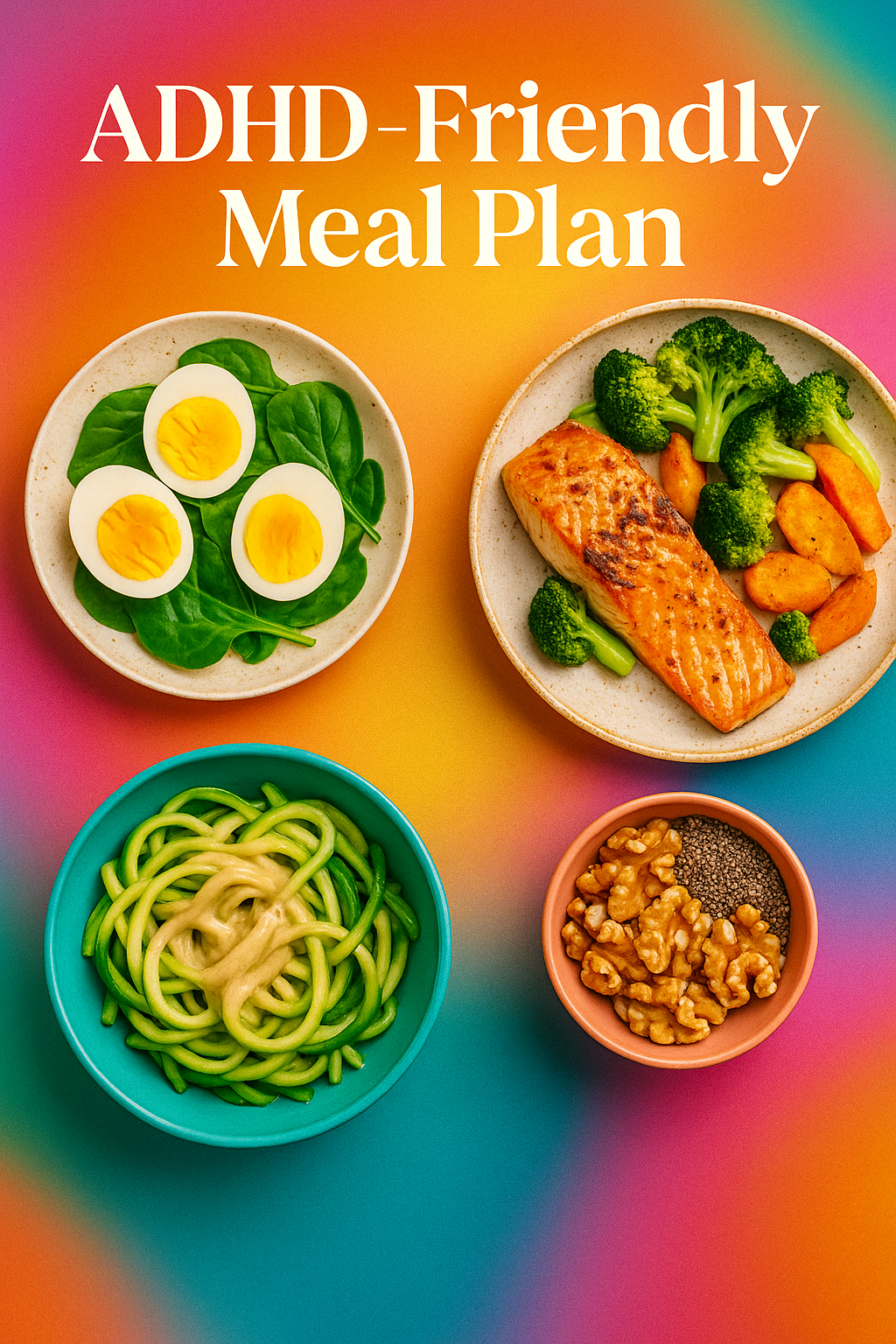
- 3 boiled eggs with spinach and flaxseed
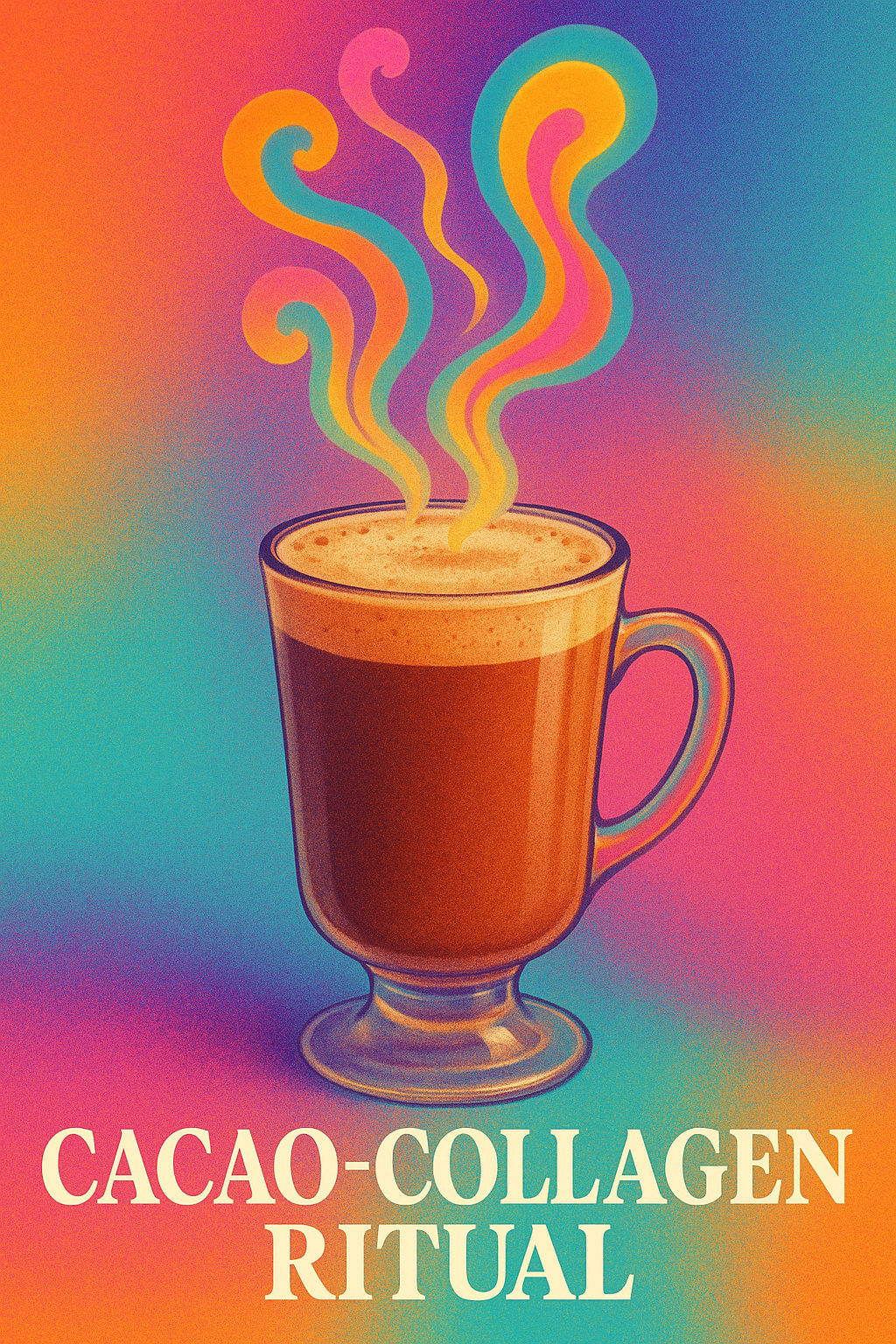
- Cacao-collagen latte with unsweetened almond milk
Lunch
- Grilled salmon with roasted broccoli and garlic
- Side of carrot “noodles” with olive oil + black pepper
Snack
- Handful of walnuts and chia crackers
- Matcha with cinnamon
Dinner
- Roast chicken legs with crispy skin
- Courgette noodles with tahini dressing
- Fermented veg on the side
Evening Ritual
- Magnesium glycinate supplement
- Herbal tea (ashwagandha or reishi)
This isn’t restrictive — it’s colourful, rich, and deeply satisfying. The ADHD brain needs pleasure and ease, or the plan won’t stick.
Supplements That Actually Help
There’s no magic pill, but these make a difference for me (always consult your doctor):
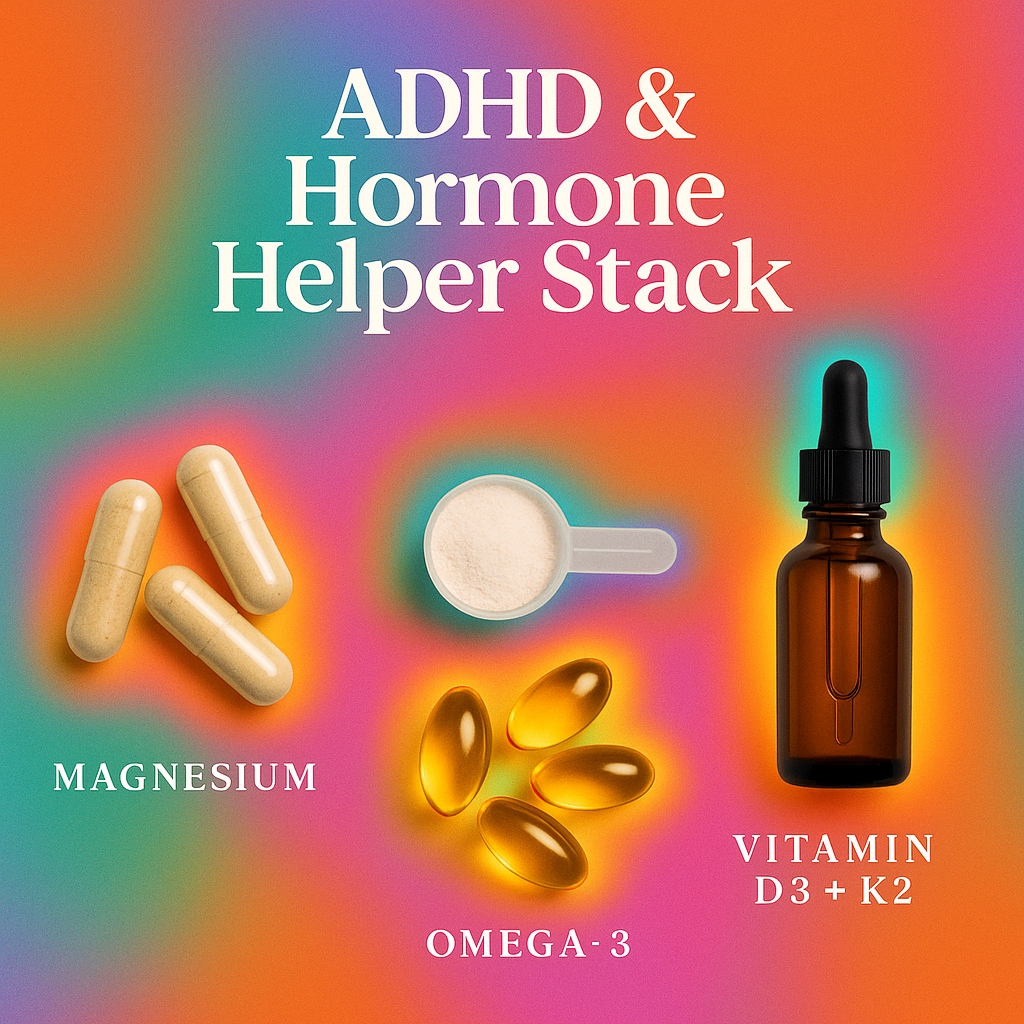
- Magnesium Glycinate → Calms the nervous system, aids sleep.
- Inositol → Balances insulin + supports focus + reduces anxiety (Psychopharmacology, 2014).
- Omega-3 → Vital for dopamine, mood, and reducing inflammation.
- Vitamin D3 + K2 → Hormone regulation + bone health.
- L-Tyrosine → A precursor to dopamine, best taken in the morning.
My Personal Ritual
I live this every day: cacao in the morning, eggs as my anchor, a heavy dose of greens, fermented foods for gut love, and salmon or chicken to carry me through. Snacks are crunchy seeds and walnuts instead of crisps. Nights are magnesium, ashwagandha, journaling, and early bed.
It’s not about perfection — I still have pizza nights and the rare sweet treats. But building a foundation of hormone-smart, dopamine-friendly foods means I’m not at the mercy of every craving or mood swing.
FAQ
Highly processed carbs, refined sugars, and caffeine overload tend to spike symptoms by destabilising blood sugar and cortisol.
Yes. Studies show nutrition affects estrogen metabolism, progesterone stability, and neurotransmitter pathways. Pairing protein + fat with fibre-rich carbs is key.
Not always. Women are more sensitive to fasting stress. Short, gentle fasting (like 12 hours overnight) may help, but extreme fasting can disrupt cycles.
Magnesium, omega-3s, inositol, and amino acids like L-tyrosine have been studied for focus and mood. They’re not replacements for medication but can be supportive.
References
- Frontiers in Neuroscience, 2020 – Estrogen and dopamine interaction
- NIH Office of Dietary Supplements – Choline fact sheet
- Translational Psychiatry, 2016 – Omega-3 and dopamine
- Nature Reviews Endocrinology, 2021 – Gut microbiota and hormone regulation
- Journal of Medicinal Food, 2019 – Cinnamon and glucose regulation
- American Diabetes Association, 2022 – Post-meal walking benefits
- Psychopharmacology, 2014 – Inositol and anxiety
(Full clickable links embedded above.)
Suggested Reading:
Best Biohacking Tools for Women in 2025 (Tested + Approved)
The Female Biohacker’s Guide to Longevity: Beauty, Brains & Balance in 2025
The ADHD Girl Guide to Glowy Skin on Overwhelming Days
The Ritual Reboot: How to Build a 2026 Wellness Routine That Works With (Not Against) Your Brain
5 Signs You Should Get Clinically Tested For ADHD
Burnout Recovery Plan 2025: How To Rebuild Your Energy, Boundaries & Life