
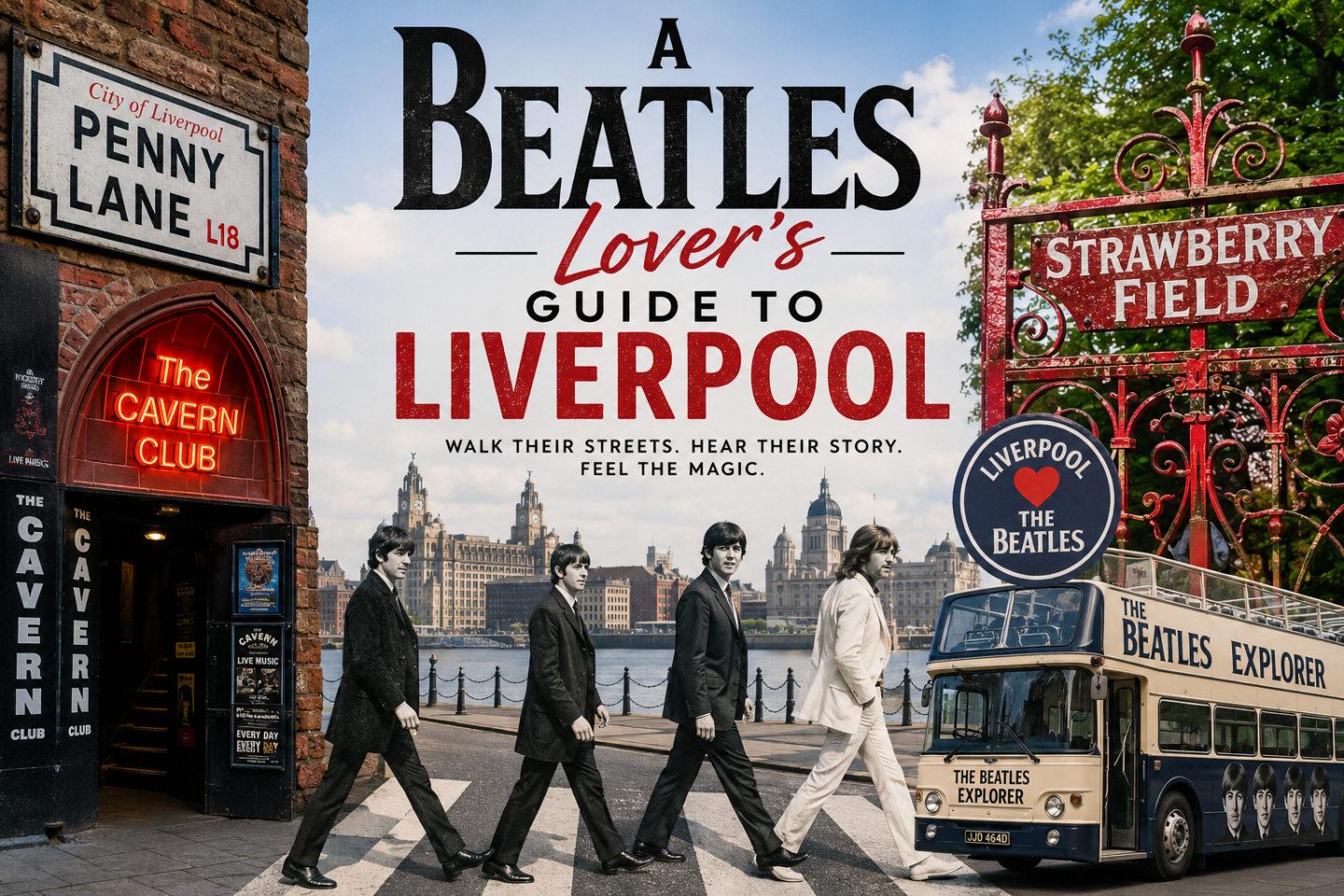
There is a moment, somewhere between standing outside John Lennon’s childhood home in Woolton and walking down Penny Lane for the first time, when it all clicks. The Beatles were real people, from a real place, and that place is right here.
Liverpool wears its connection to the Fab Four with enormous pride, and rightly so. The city has done a remarkable job of preserving and celebrating the landmarks, stories, and spirit of one of the greatest bands the world has ever seen. If you have ever had even a passing interest in the Beatles, a day spent tracing their footsteps through Liverpool is something you will remember for a very long time.
Here is where to go.
- Mathew Street and the Cavern Club
Every Beatles pilgrimage begins on Mathew Street. This narrow cobbled lane in the city centre is the spiritual home of the band’s early years, dominated at one end by the famous Cavern Club. The Fab Four played here hundreds of times between 1961 and 1963, refining their sound and building a devoted following before the world had any idea who they were.
Today, the Cavern is still one of the finest live music venues in Britain. Walk in on any afternoon, and there will be a band on stage playing classics with real energy and warmth. The low brick arches, the dim lighting, and the sheer history of the place make it utterly atmospheric.
Go in the evening, and you will find it absolutely electric. The street itself is lined with statues, murals, and memorabilia shops, and the whole thing feels like a celebration rather than a museum piece.
- Strawberry Field
Just a short journey from the city centre, in the leafy suburb of Woolton, Strawberry Field is one of the most moving stops on any Beatles itinerary.
The former Salvation Army children’s home was a place John Lennon regularly visited as a boy, climbing over the wall to play in the garden. Its name became immortalised in one of the band’s most beloved songs, and in 2019, the site opened its gates to the public for the first time.
The permanent exhibition inside tells the story of John’s childhood and his connection to the place with great sensitivity and detail. Original photographs, personal artefacts, and immersive displays bring it all to life in a way that feels respectful and genuinely touching. The gardens are peaceful and beautifully maintained, and the famous red gates make for an iconic photograph. Allow at least an hour here.
- Penny Lane
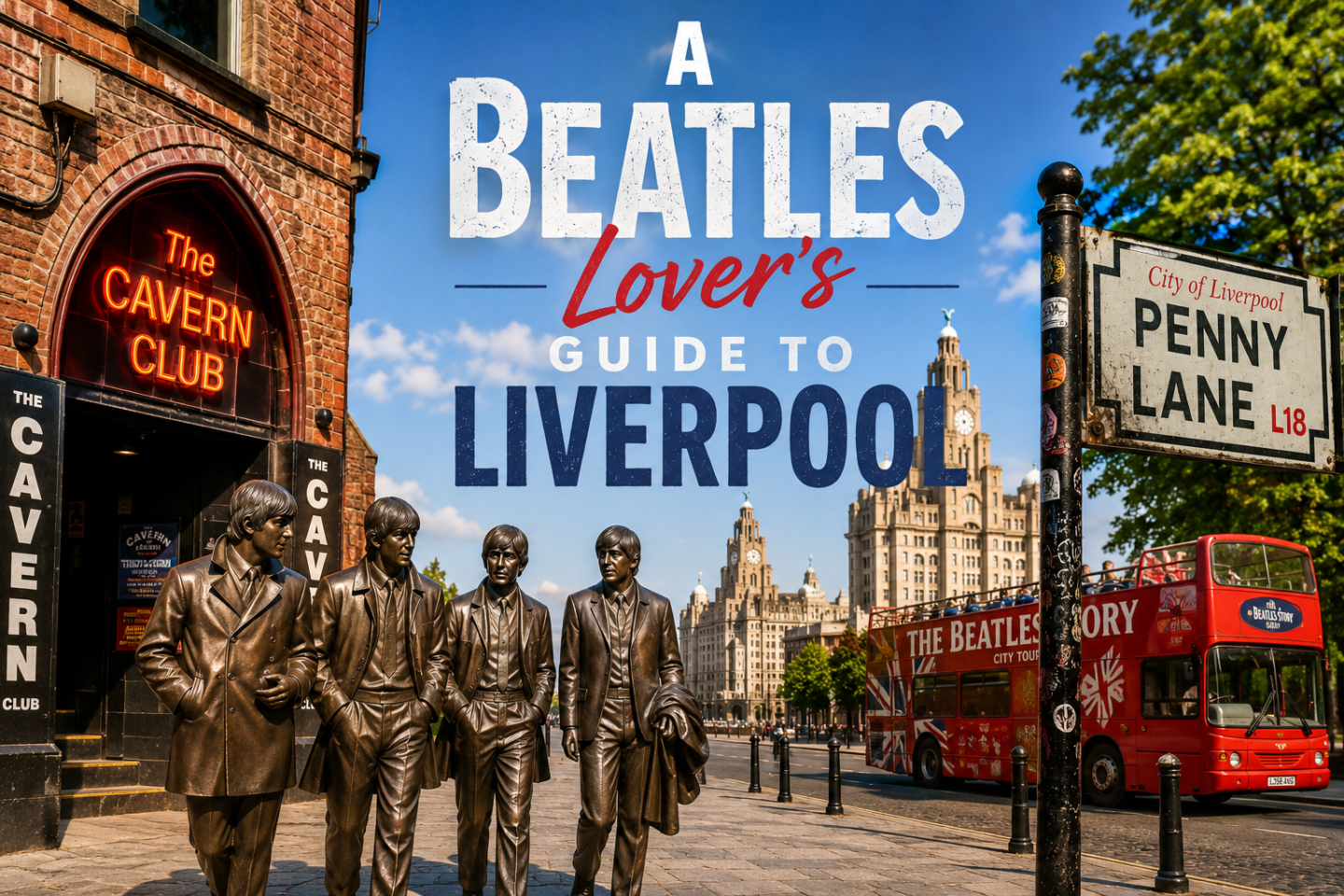
A short drive from Strawberry Field, Penny Lane is perhaps the most cheerful stop on the route. The street itself is entirely ordinary in the best possible way, a pleasant south Liverpool thoroughfare lined with shops and houses, and yet it radiates a kind of magic that is hard to explain until you are standing in it. The barber’s shop is still there. The shelter in the middle of the roundabout is still there too. Everything the song described is still very much present, and the whole thing is quietly delightful.
The street signs are replaced with some regularity, as they have a habit of disappearing into fans’ luggage, but the council has long since learned to keep spares. Take the obligatory photograph, pop into one of the independent cafés nearby, and enjoy the fact that you are somewhere that has genuinely meant something to millions of people around the world.
- The Childhood Homes
For a deeper connection to the band’s origins, the National Trust looks after two properties that are remarkable in their ordinariness. Mendips, on Menlove Avenue in Woolton, was the semi-detached home where John Lennon grew up with his Aunt Mimi.
20 Forthlin Road, in Allerton, was the McCartney family house where Paul and John wrote some of their earliest songs together, often while bunking off school.
Both are modest and carefully restored. Guided tours bring them to life with wonderful detail. The experience runs on a timed basis, and booking in advance is strongly recommended, as availability fills up quickly, particularly in summer.
- The Beatles Story
Back at the Royal Albert Dock, the Beatles Story is a dedicated museum that traces the band’s entire journey from their scrappy Liverpool beginnings to their final rooftop concert. It is an immersive experience, with recreated sets, original memorabilia, and carefully curated audio throughout.
The replica Cavern Club inside the museum is a highlight, as is the section covering the Hamburg years, which tends to get less attention than it deserves. From 2026, a new VIP experience allows visitors to sit at Ringo’s original drum kit. Plan for at least two hours, and consider booking in advance during peak season.
A useful tip: the Beatles Explorer open-top bus, departing daily from the Albert Dock, connects several of these landmarks on a guided route and is a relaxed way to take in the geography of the band’s story.
A Note on 2026
If you are planning a visit this year, International Beatleweek runs from 26 August to 1 September 2026. This seven-day festival is the largest Beatles celebration on the planet. Tickets are available through the event’s website from £50 per person.
Liverpool does something to people. It is a city with a genuine story to tell, and the Beatles chapter is told here with more heart and authenticity than anywhere else on earth. Give yourself a full day, wear comfortable shoes, and let the city do the rest.