
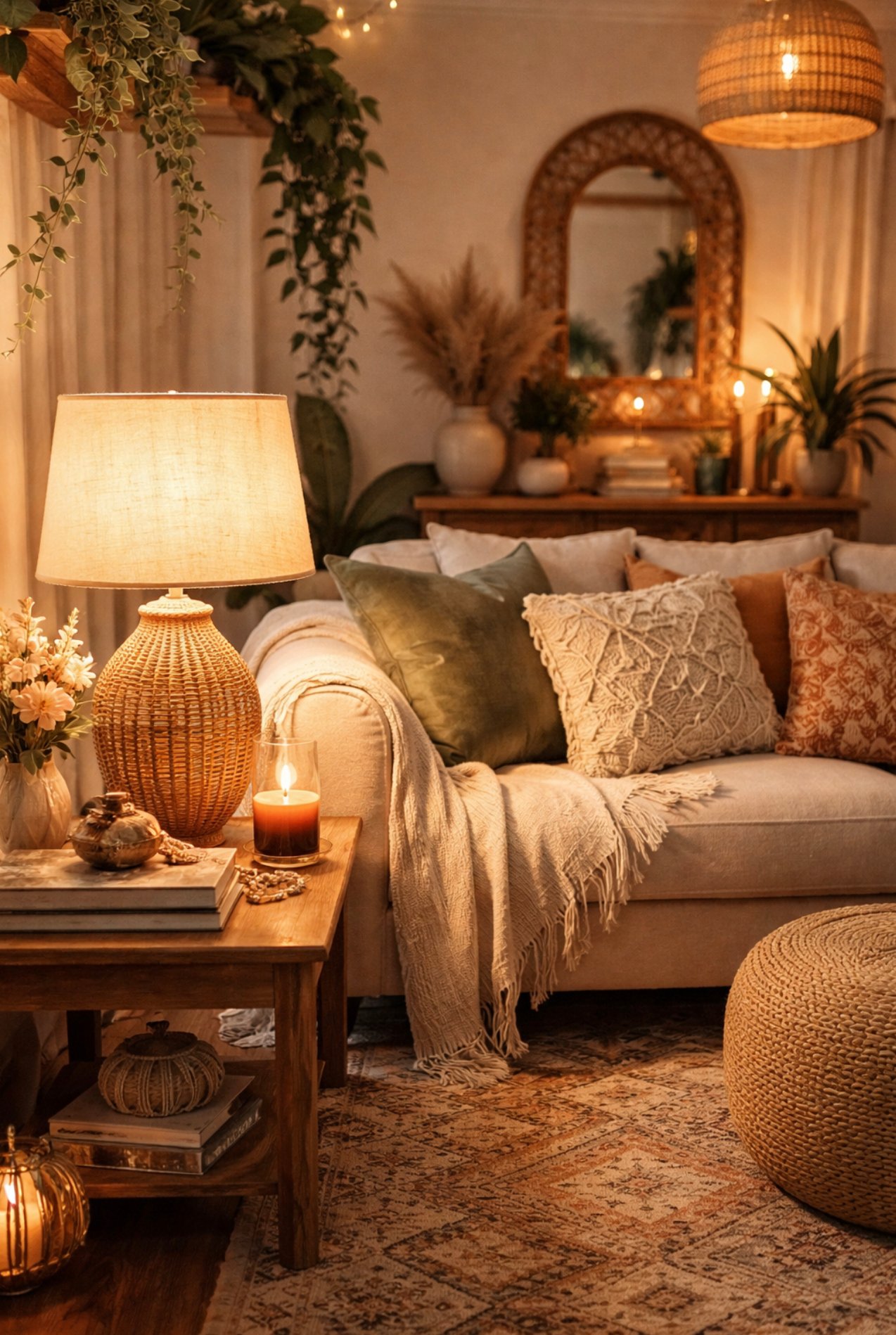
I’ve always believed that table lamps are like jewellery for a room. Small enough to experiment with, but powerful enough to completely change the aesthetic. This is particularly true of living rooms, which need the right layers of light to really make an impact.
Over the years, I’ve found that table lamps are a great way to achieve this, and I’ve learned what works, what doesn’t, and how to choose pieces that look beautiful by day and even better by night. And that’s exactly what I’ll teach you to do in this article.
Why table lamps matter more than you think
Ceiling lights tend to do one job and one job only: illuminate a room. Table lamps, however, create atmosphere, too, which is no mean feat.
Say you switch on a lamp beside the sofa. The space becomes softer and more intimate, and the atmosphere changes in an instant. In fact, this little bit of light is often the difference between a room that’s just “lit” and a room that feels lived in and homely.
Another benefit is flexibility, because unlike wall lights or pendant lights, a lamp can be moved depending on where the mood takes you. You can try it on a sideboard in winter, for example, then shift it to a console table in summer, or anywhere else you like.
These reasons make these kinds of lamps one of the most forgiving design choices for anyone who enjoys refreshing their home without redecorating every season.
Choosing the right size for your space
One of the most common mistakes I see is lamps that are too small to make a difference or so large that they dominate the room. So, a simple thing to remember when choosing the right table lamp is that proportion is everything.
Let’s take a standard side table beside a sofa. Here, I’d usually recommend a lamp between 45 and 65 centimetres tall. If the lamp will sit on a larger console or dresser, you can afford to go taller and try more sculptural shapes.
However, try not to go over the top, and make sure the shade is balanced with the base, in terms of sizing.
Another golden nugget of table lamp advice is that when you’re seated, the bottom of the shade should be roughly at eye level. This avoids glare and keeps the light gentle rather than harsh.
Matching lamps to your style
The joy of lamps on the table is that there’s a design for every personality. Some people love clean Scandinavian shapes in pale wood and linen shades, for example, while others are drawn to bold ceramic bases, coloured glass, or quirky pieces that double as art.
If you’re unsure what might work for you, a statement lamp can be the perfect place to introduce colour in a neutral or modern, minimalistic space. In terms of colours, I always think that deep greens, inky blues, or warm terracotta tones look beautiful against cream walls. In more eclectic rooms, I often suggest simpler lamps that allow patterned cushions and artwork to take centre stage.
At the end of the day, it’s all about what you want from the space, and getting that balance right between lamp and the room’s visual identity.
Where to place table lamps in the living room
There are no strict rules, but a few positions almost always work:
Beside the sofa
This is the most practical spot, and a lamp here provides light for reading and makes the seating area feel grounded. I like to place one on each end of a long sofa to create symmetry.
On a console table
Hallways that open into living rooms can feel dark, but a lamp on a console creates a gentle glow that welcomes guests. It also goes a long way to connecting the two spaces.
In forgotten corners
Almost every room has an awkward corner that never quite works, no matter what you do with it. A table lamp can be the simplest way around this, turning dead space into a cosy feature.
On open shelving
If you have built-in shelves, tucking a small lamp among books and objects adds depth. It also draws the eye and makes the display feel curated rather than cluttered. However, this can be tricky to get right, particularly if you have lots of books and trinkets.
Pairing shades and bases
When it comes to lamp shades, the base may catch your eye, but the shade controls the quality of light and overall experience of the lamp.
Linen shades give a soft, relaxed glow and suit country or coastal interiors, for example, while silk or satin shades usually feel more formal and reflective. Dark shades create drama and focus the light downward, making them a solid choice for reading corners.
Then, there’s the matter of shape. Drum shapes are modern and clean, while tapered shapes feel more traditional. If in doubt, choose a shade that’s slightly wider than the base to keep the proportions comfortable.
The beauty of mixing and matching
People often ask whether lamps need to match. The honest answer is no, because while matching pairs can look uniform and consistent, mismatching adds character. A trick I use is to keep one element consistent, with two lamps having linen shades, for example, but different bases.
This creates harmony without being predictable or too “perfect”, because in a relaxed family living room, a little imperfection is often what makes the room feel special.
Beautiful table lamps for living room styling
When considering table lamps for living room spaces, imagine the room at night rather than in bright daylight. Where will you sit with a book? Where do you want a gentle glow while watching television? These kinds of questions will help you find the perfect option for your home because they’ll support how you actually live.
You could also try using two or three smaller lamps instead of one large overhead light. This creates pools of warmth around the room and flatters everyone far more than a single ceiling bulb.
Finally, for open-plan homes, lamps can help you define different zones. A lamp on a side table, for example, can subtly separate the living area from the dining space without any physical barriers. This means that you don’t have to compromise the design and size of the overall space to differentiate between areas.
Practical considerations
Beauty is important, but practicality matters too, so take these points into consideration when picking out your dream table lamps.
Bulb choice
Warm white bulbs between 2,700 and 3,000 kelvins are my go-to for living rooms, and anything cooler can feel clinical. Dimmable bulbs are also worth considering if you want that added flexibility.
Cable length
This is a big one, and it’s important to always check where the nearest socket is to your chosen table. Even the most stunning lamp can quickly lose its charm if the wire snakes awkwardly across the floor.
Safety
If you have children or pets, choose a sturdy base that won’t tip over easily. Ceramic and metal bases tend to be more stable than very lightweight designs.
Caring for your lamps
Lamps don’t need much maintenance, but a little care keeps them looking fresh for longer. I dust shades with a soft brush and wipe bases with a dry cloth, while fabric shades can be gently vacuumed using a low setting.
And remember, avoid placing lamps in direct sunlight for long periods, as this can fade colours.
Make lighting part of your personality
What I love most about lamps is how personal they feel, and where a pendant light is often chosen for practicality, a lamp is chosen with the heart. It might remind you of a holiday, echo the colour of your favourite painting, or simply make you smile.
I always encourage homeowners to trust that instinct when buying theirs. So, if a lamp makes you pause and imagine it glowing in your own living room, it’s probably the right one.
Final thoughts
Lighting is one of the easiest ways to refresh a home without getting out the paintbrush or drill.
And if you’re unsure where to start, think about the mood you want rather than the trend of the moment. Because classic shapes and sturdy materials never go out of date, and the right lamp will grow with your home for years.