
Pregnancy is a marvelous change process, but at the same time, it causes physical changes as you are stretched and adjusted to carrying the growing baby. An umbilical hernia is one of the problems that come up in some the expectant mothers. Although the condition might be alarming, it can usually be addressed with support.
Understanding Umbilical Hernia in Pregnancy
An umbilical hernia occurs when some kind of tissue, including a section of your intestines, pushes through the weak point around your belly button. This may happen during pregnancy, as your swollen belly and growing fetus put pressure on your abdomen. Stretching the abdominal muscles may increase the size of a weak spot that may already be there or give rise to a new one.
You might notice:
- Tenderness in the area or around your belly button, particularly during standing and straining.
- Slight coughing, sneezing, and lifting pain.
- Lower abdomen- a sense of pressure or a sense of weakness.
The hernia is not harmful in most cases of pregnancy; however, when your belly swells, it may hurt or be uncomfortable. In rare cases, there may arise some complications in the event that some section of the intestine gets trapped (a condition referred to as incarceration), which necessitates urgent medical intervention. Symptoms such as intense pain, redness, or nausea would compel you to keep off immediate contact with your physician.
Since surgery is usually delayed until after delivery, non-surgical intervention, which includes rest, posture correction exercises, and belly support, is the resultant solution for the expectant mother.
When to Use a Belly Band for Umbilical Hernia
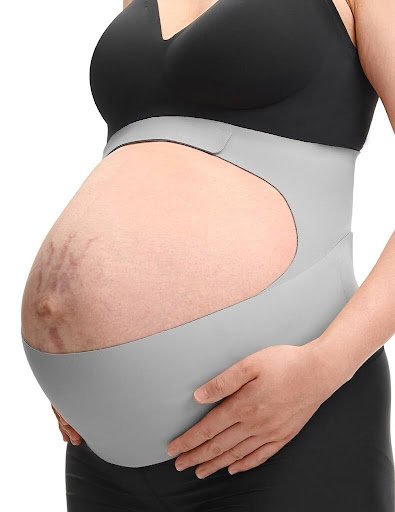
A maternity belly band is a stretchy, soft band that helps to support your abdomen and lower back during pregnancy, in a gentle manner. This can be a lifeline to moms who have to cope with an umbilical hernia.
You may want to use a belly band when:
- When standing or walking, you experience pressure or pain around your belly button.
- The hernia swell is further extended with the gestation of your pregnancy.
- You like to get back or abdominal strain off in the course of day-to-day activities.
A belly band can redistribute your belly weight and relieve pressure on your abdominal wall by use of gentle compression, which avoids any strain on your belly and also decreases the pressure of hernias. It may also assist you to sit up straight, relieve the pain in your lower back and move easily.
Nevertheless, it is important to keep in mind that a belly band does not cure the hernia; it just allows one to deal with the discomfort. Never use one, especially when your hernia is large or painful, unless your doctor suggests otherwise.
Choosing the Right Umbilical Hernia Belly Band
The same cannot be said about all maternity bands. In the case of an umbilical hernia, the right design and fit are even more important. Here’s what to look for:
Gentle, Even Support
An effective belly band must be tightly fitted on your abdomen, and this should be tight enough that it gives the belly band a tightness to support the hernia region without being too tightness that it hinders movement or breathing. Keep off hard materials or excessive straps, which may press onto the bulge.
Ventilable and Adjustable Design.
The belly is always swelling, so making the band adjustable is essential. Find one that is made of soft, breathable cloth that makes you feel cool and comfortable even after several hours of wearing. Hook-and-loop closures or Velcro can be easily adjusted during the course of your pregnancy.
Comprehensive and Adequate Positioning.
Select a design that will cover your lower belly and will not distract from the area around your belly button. A broad band is more stable, and the pressure is evenly distributed.
Added Back and Support Posture.
A hernia may make your core weak, thus causing back pain. These can be lumbar support bands or structured back panels that can be used to take up tension and hold the body in a balanced position.
Trusted Brands and Quality
Choose a maternity support band that belongs to a respectable brand that has been proven to be comfortable and safe.
Proper Use and Safety of Pregnancy Belly Bands
A belly band can be used to provide instant relief, but it is very important to make sure that it is used correctly in order to be safe and effective. Follow these tips:
- Wear it during active hours. Wear your band when walking, standing or performing chores – when you feel the heaviest in your abdomen. Take it off when you are lying or resting so that your skin and muscles are given a chance to breathe.
- Adjust the fit carefully. The band must not be tight but supportive. You must be able to breathe easily and move easily.
- Avoid overuse. When you wear a band all day, all year round, you may overly depend on it in the core muscles. Attempt to strike a balance between support and mild prenatal exercises, which your doctor or physiotherapist permitted.
- Watch for warning signs. The hernia could be too tight or your condition requires medical intervention, by pain, tingling, swelling, or color changes around the hernia.
- See your medical practitioner. Always consult your doctor before you use any of these support devices in the course of pregnancy, and more so when you already have a hernia. They are able to assist you in discovering the correctness and time of safe use.
Relief and Recovery After Using a Hernia Band
Although a maternity belly band is a good relief for pregnant mothers, it is also important to consider the future in recovery. Once you have given birth, there is a reduction in abdominal pressure, and mild umbilical hernias are said to resolve on their own. It would be beneficial to continue wearing light support (such as a postpartum wrap) in the early days of recovery to stabilize the core and stimulate healing.
In case your hernia does not subside or the birth causes the hernia pain, your doctor may suggest a surgical repair – generally a small surgery performed after the body has had sufficient rest following the birth of the child. Meanwhile, you should work on restoring your basic strength by using non-dangerous exercises that help to tighten your pelvic floor and abdominal muscles.
Final Thoughts
Umbilical hernias are normal and can be treated in pregnancy. It is possible to maintain your comfort and relieve the belly of excess strain with good observation, good habits, and a quality belly band with minimal stress on the expanding belly.