
WHY YOUR RUNNING LEGGINGS KEEP SLIDING DOWN (AND HOW TO FIX IT)
Imagine this: You start running with focus. But after a few minutes, you begin tugging your leggings up. This should not be happening.
Leggings are made to remain in position when training. Even with repetitive movement. Otherwise, something is wrong with their design or size.
This is why your leggings constantly slip down.
The waistband is not supportive
The waistband is the anchor point. When it is not structured, the leggings will just start to slide down as you move.
Common issues:
- Thin elastic that loses tension
- Unreinforced waistbands.
- Low-rise styles that are too low on your hips.
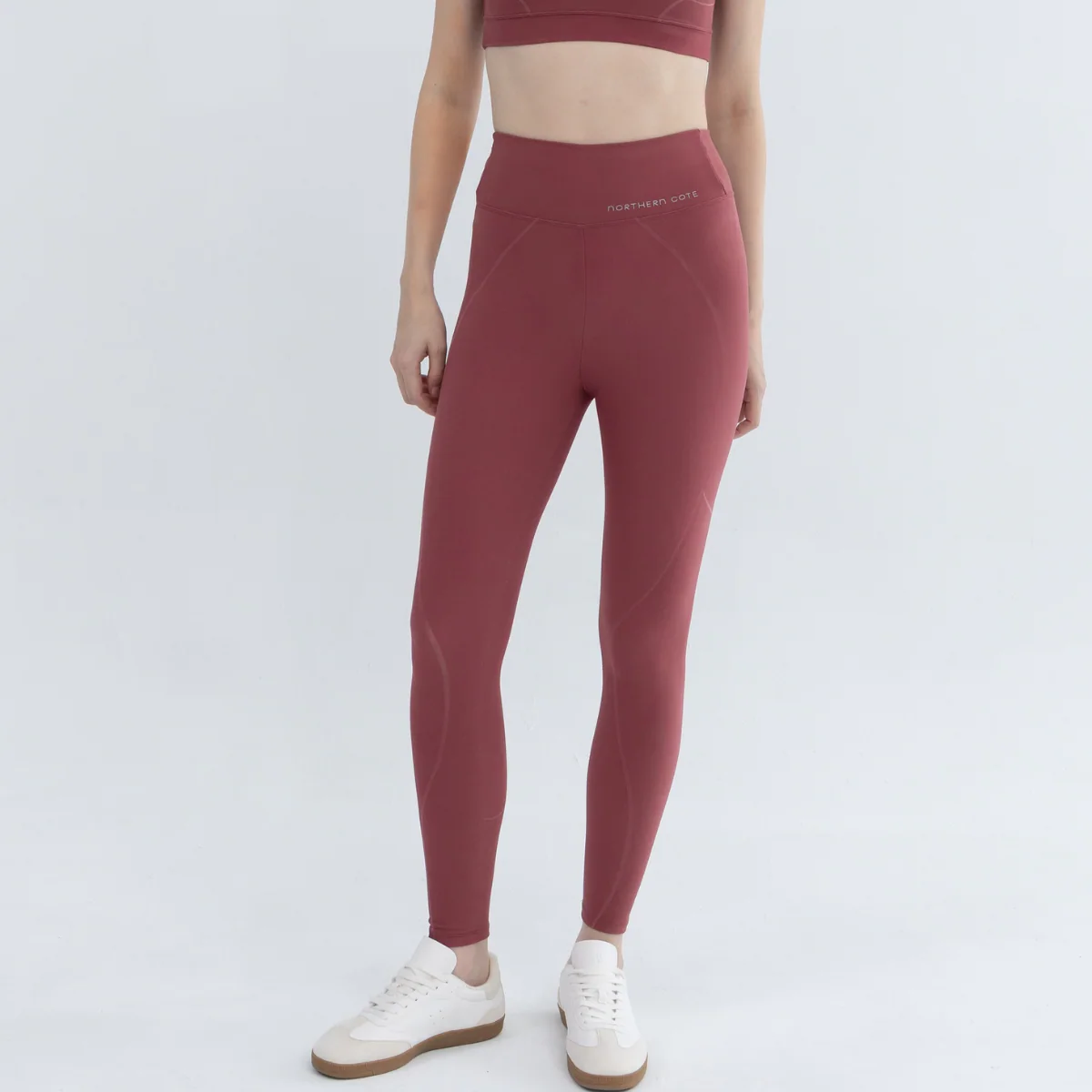
Fix: Select high-rise leggings. They should have a wide waistband to evenly distribute pressure. Seek two-layered designs around the waist. Others have built in panels for extra support.
The fit is wrong
Even a good pair will slip when the size is wrong.
Leggings that are slightly loose will lack the tension to hold them in place. Excessively tight ones can roll or slide. This is a result of pressure imbalance.
Indications of ill fit:
- Bunching of fabric behind the knees.
- Looseness around the waist.
- Excess material around the hips or thighs.
Fix: Re-assess your size based on measurements. Well-fitting running pants should be tight on your whole lower body. But without digging into your waist.
The fabric lacks grip and compression
Fabric contributes significantly to stability. Poor quality materials do not have the elasticity and grip required in high movement activities such as running.
If your leggings are made out of:
- Thin, overly soft fabric
- Reduced elastane content
- Fast-stretching materials
…then they will not hold during movement.
Fix: Find performance fabrics. They should have sufficient compression and four-way stretch. These materials create friction against the skin. Hence, the leggings stay in place.
You are dealing with wear and tear
Even the best-made leggings wear out. Elastic fibers degenerate with repeated washing and wear and tear. Hence, the fabric becomes less elastic.
Warning signs:
- Waistband feels looser than before
- Fabric does not snap back when stretched
- Leggings slip more than they did.
Fix: Once elasticity is lost, it cannot be regained. Replacement is the only reliable solution.
The cut does not fit your body shape
Not all leggings are designed the same way. There are variations in:
- Rise
- Hip to waist ratio
- Seam positioning.
This may influence their ability to stay up.
For example:
- Straight cuts might not fit the curvy bodies.
- Slipping can occur due to low compression at the waist.
- Poor seam positioning may decrease stability.
Fix: Find designs that fit your proportions. High-waisted leggings with contouring seams flatter the natural figure.
Missing an extra support function
There are leggings that depend solely on the tension of the fabric. Others incorporate elements that enhance hold.
Useful features are:
- Internal drawstrings
- Silicone grip lining.
- Reinforced waistbands.
Fix: Choose leggings with these added support elements. Especially if you consistently experience slipping.
Final thoughts
You do not have to put up with slipping leggings. The problem is the fit, the fabric, or the structure. You need to fix these aspects.
Good running leggings do not need any kind of adjustment. They should always remain in place so that you can concentrate on your running.