
Second Builds and Smarter Foundations: How SIGMAS Is Rewriting Its Growth Story
Some of the most interesting companies are built not on a founder’s first attempt, but on the second. Lessons from earlier ventures often reshape how founders approach growth, infrastructure, and long-term strategy. That perspective sits at the center of SIGMAS, a performancewear company founded by Jay Cheng and Daniel Hoang.
A Founder’s Second Build
Jay Cheng’s path to SIGMAS reflects years of experience across supply chains and startup environments. A UCLA Business Economics graduate, he began his career as employee number five at a family import business that eventually scaled to more than 500 employees. The experience gave him early exposure to the logistics, sourcing, and operational complexity behind global product businesses.
Cheng later launched several direct-to-consumer ventures in the early 2010s, including one backed by Mucker Capital. While the company achieved early momentum, its trajectory ultimately stalled after a strategic pivot that increased its dependence on third-party marketplaces. The shift limited control over pricing, merchandising, and the customer relationship, making it more difficult to build lasting loyalty around an owned brand. The experience left Cheng with a clearer understanding of how difficult it can be to build a lasting brand without strong control over product, pricing, and customer relationships.
Nearly a decade later, Mucker returned as an investor when Cheng began developing SIGMAS. The new venture would benefit not only from capital but also from lessons learned during the earlier chapter.
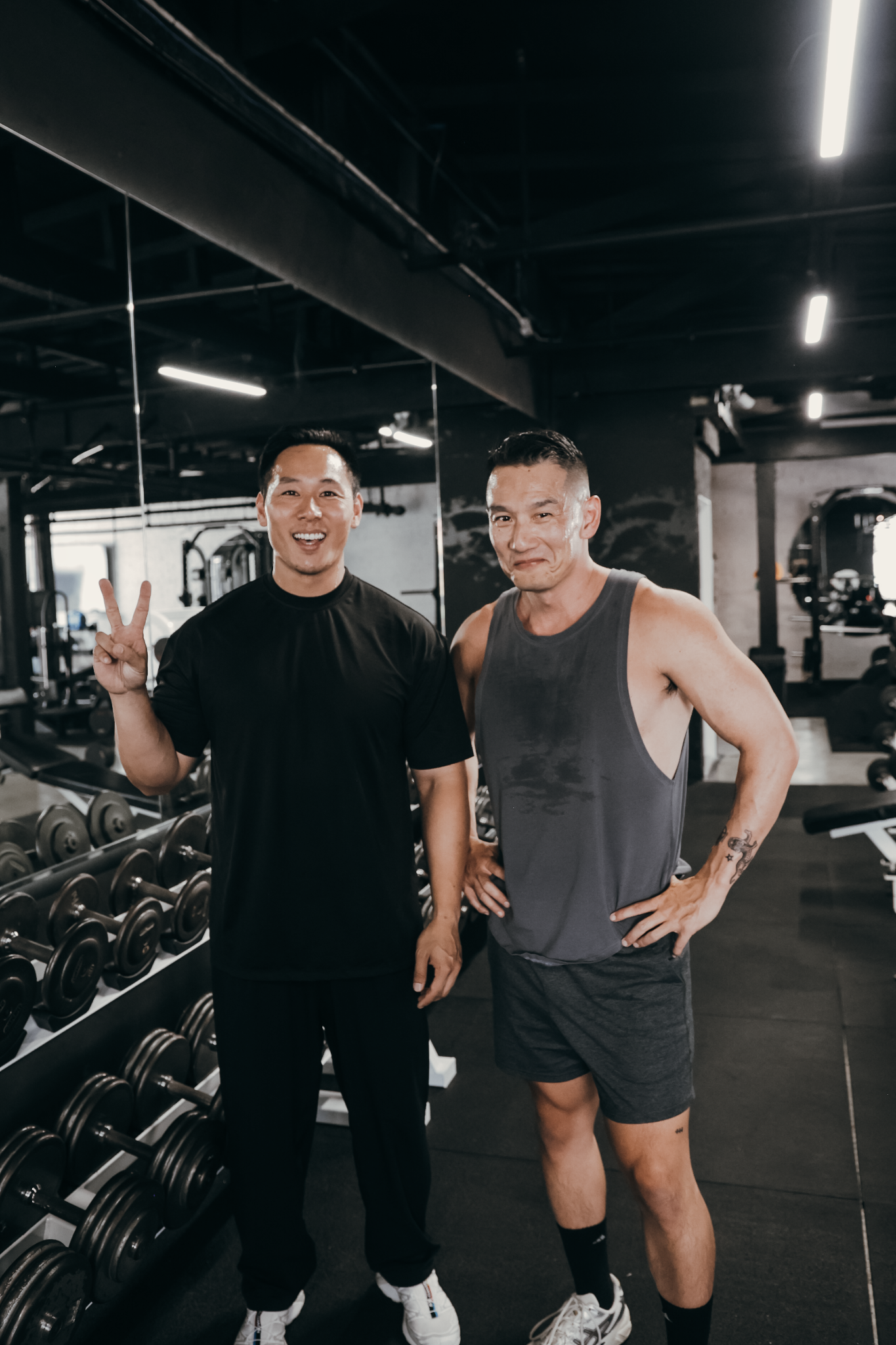
The brand recently closed a $1 million seed round backed by Mucker Capital and HSG, formerly Sequoia China. The investment places the young company within a network known for supporting global consumer brands. HSG’s portfolio includes Amer Sports, the group behind labels such as Wilson, Arc’teryx, and Salomon, and the firm has also participated in major fashion transactions, including the acquisition of Golden Goose.
For SIGMAS, the funding represents more than early backing. It situates the brand within an ecosystem experienced in building performance-driven consumer companies, while reinforcing the stronger foundation Cheng set out to create with his second build.
Manufacturing Insight Meets Fitness Culture
Cheng partnered with Daniel Hoang, whose background sits squarely inside the performancewear industry. Over more than five years, Hoang worked extensively in activewear manufacturing and private-label development, building supply chain relationships that shape how fitness apparel is produced and priced.
That experience informs what the founders describe as a “priced for destruction” philosophy.
In a category where premium activewear brands often command steep prices, SIGMAS aims to deliver performance-focused apparel that competes aggressively on value. Hoang’s familiarity with production processes allows the company to engineer efficiency directly into its manufacturing strategy, enabling products designed for durability and performance to reach consumers at a price point that challenges much of the existing market.
The approach is straightforward in principle: pound for pound and dollar for dollar, strong value within performance apparel.
A Different Approach to Athleisure
SIGMAS is also approaching design with a perspective shaped by broader cultural shifts. While athleisure originally emerged as a blend of athletic performance and everyday comfort, the category has gradually become visually uniform. Similar aesthetics dominate much of the market.

SIGMAS deliberately draws influence from streetwear culture, bringing a sharper stylistic edge to training apparel. The approach reflects how many consumers now experience fitness as part of a broader lifestyle connected to music, fashion, and digital communities.
For younger audiences in particular, the lines between training gear and everyday fashion have largely disappeared. Performance apparel is as likely to appear in cafés or airports as it is in gyms.
Incubation and Infrastructure
The company’s early development was accelerated through an incubation partnership with SHEIN, one of the largest fashion platforms in the world. The relationship provided SIGMAS with access to global supply chain capabilities and international logistics networks that are typically difficult for early-stage apparel companies to assemble independently.
Through the ecosystem, the brand introduced more than 600 SKUs focused largely on men’s performancewear. The platform allowed SIGMAS to scale product quickly while leveraging established manufacturing and distribution infrastructure.
The partnership also produced an important lesson about channel fit. SHEIN’s marketplace shopper tended to be more price-focused and transactional, while the SIGMAS customer was increasingly drawn to identity, philosophy, and community. SIGMAS has since exited the incubation partnership amicably, with SHEIN remaining supportive through the transition.
In December 2025, SIGMAS pivoted to direct-to-consumer growth and launched Sigmas.com on SHOPLINE. The platform provides the technical framework needed to support cross-border ecommerce, enabling the company to manage large product catalogs and operate a global storefront as the brand expands internationally.
The response to the DTC launch was immediate, with Sigmas.com reaching an annualized revenue run rate of approximately $3 million within six months. Growth later moderated as inventory, manufacturing capacity, merchandising, and working capital worked to catch up with demand.

In February 2026, SIGMAS also expanded beyond its initial men’s focus with a women’s line. The collection shares the same philosophical foundation as the men’s line, while maintaining its own distinct identity.
SHOPLINE enables SIGMAS to manage merchandising, coordinate marketing efforts across regions, and maintain direct relationships with customers as the brand grows. That ownership of the customer relationship reflects one of the central lessons Cheng carried forward from his earlier venture.
Redefining the “Sigma” Archetype
The brand’s philosophy extends beyond product and infrastructure. The founders describe SIGMAS as a reinterpretation of the “sigma” archetype often portrayed online as an independent outsider operating outside traditional hierarchies.
Rather than celebrating isolation, the company frames the idea as a community of individuals connected by shared values around discipline, movement, and personal growth. Athletes, creators, and everyday consumers often build similar routines around training, self-improvement, and performance.
SIGMAS aims to reflect that shared mindset.
That philosophy is also taking form through The SIGNAL by SIGMAS, its affiliates and partnerships program for trainers, coaches, and athletes. The program focuses on working with practitioners who shape behavior and community through their daily work.
Building with a Stronger Foundation
The company remains early in its development, but its foundation reflects a deliberate strategy. Venture backing from Mucker Capital and HSG provides institutional credibility. The former incubation partnership with SHEIN provided speed to market, supply chain access, and early validation. SHOPLINE now supplies the infrastructure needed to support SIGMAS’s direct-to-consumer and international ecommerce growth.
Together, those elements form the backbone of a brand designed for long-term growth.
For Cheng, the second attempt at building a company carries lessons that shape every part of the new venture. This time, those lessons are embedded in the structure of the business itself, creating a foundation built not only for speed but for durability.